
Bespoke Wooden Table Bases: Traditional and Modern Turned Designs for Hospitality Interiors
In restaurants, hotels, bars and private members’ clubs, tables play an important role in the overall interior design. While the table top is often the first element people notice, the base underneath can completely change the character of the furniture.
For traditional and design-led hospitality interiors, a standard metal table base is not always the right solution. Bespoke wooden table bases offer far greater freedom over shape, proportion, timber, finish and decorative detail.
At Dynamic Contract Furniture, we can manufacture bespoke solid wood table bases for commercial interiors. Designs can range from simple timber pedestals to highly decorative turned wooden table bases with traditional profiles, shaped feet and intricate detailing.
This capability is particularly useful for refurbishment projects. Existing furniture may need to be matched, or an interior designer may require a completely new table base created for a particular scheme.
A good example is our work at The Queen’s Club in London. For this project, we reproduced bespoke wooden dining table bases and solid ash table tops to match the furniture already installed within the restaurant.
What Is a Bespoke Wooden Table Base?
A bespoke wooden table base is manufactured specifically for an individual project rather than selected from a standard range.
This gives designers much greater control over the appearance and proportions of the finished table.
Depending on the design, a bespoke base can feature:
- Traditional turned timber columns
- Decorative pedestal bases
- Barley-twist or spiral turned details
- Twin-column dining table bases
- Shaped timber feet
- Square or circular floor plates
- Decorative mouldings and profiles
- Bespoke heights and proportions
- Custom timber species
- Bespoke wood stains and finishes
The result can be very different from a conventional commercial table base.
Instead of simply supporting the table top, the base becomes an important part of the furniture design.
The Craft of Turned Wooden Table Bases
Wood turning has been used in furniture making for centuries. It allows solid timber to be shaped into decorative profiles that would be difficult to achieve using standard straight components.
Traditional turned table bases may feature curves, rings, tapered sections and decorative details. More elaborate designs can include spiral or barley-twist profiles.
These techniques can create anything from a restrained classic pedestal to a highly decorative statement base.
For hospitality interiors, this provides an opportunity to introduce craftsmanship and character into a space.
A turned wooden table base can work particularly well in traditional restaurants, boutique hotels, private members’ clubs and heritage-inspired interiors. However, the same manufacturing techniques can also produce cleaner profiles for contemporary schemes.

More Than One Style of Turned Wooden Base
One of the main advantages of bespoke manufacturing is the freedom to create very different designs.
A large round dining table, for example, may require a substantial central pedestal. A rectangular restaurant table may work better with two turned columns connected by a structural rail.
Smaller tables can use more delicate turned profiles and compact floor plates. Decorative bases can also incorporate spiral columns, shaped feet or traditional furniture details.
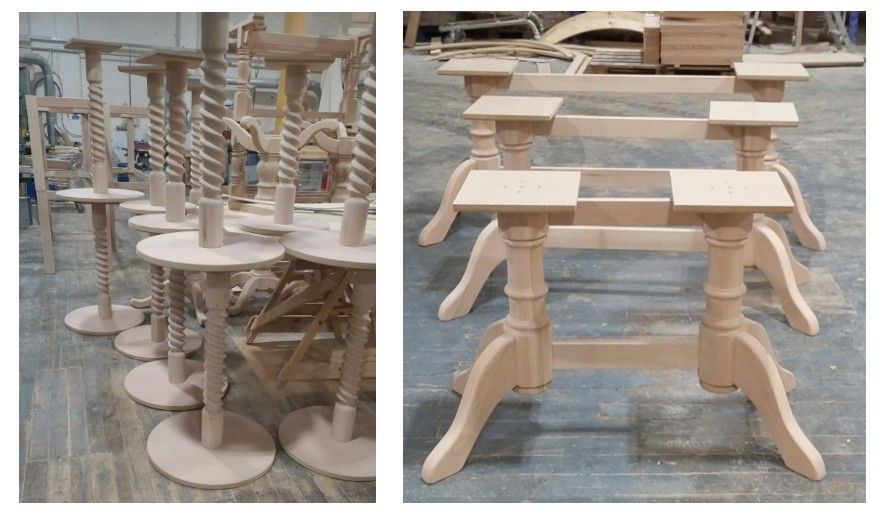
The examples shown here demonstrate just some of the possibilities.
From barley-twist table bases and decorative pedestals to twin-column dining bases, each design can be developed around the table top and interior scheme.
This allows the base to become part of the overall design rather than an afterthought.
Bespoke Table Bases for The Queen’s Club, London
A strong example of this approach can be seen in our project for The Queen’s Club in London.
The requirement was unusual because the restaurant already contained established furniture. New tables therefore needed to complement the existing interior rather than introduce a noticeably different design.
Our team worked from a sample of the existing wooden table base. We then reproduced the shape and proportions to create new bespoke bases for the restaurant.
This allowed the additional tables to sit naturally alongside the existing furniture.
Matching existing furniture can be particularly valuable in established hospitality interiors. Replacing every table simply because an original design is no longer readily available can be unnecessary and disruptive.
Bespoke manufacturing offers another solution.
Where practical, an existing table base can provide the reference for a new design. Alternatively, we can work with drawings, dimensions and design specifications to develop a base for a completely new scheme.
From Raw Timber to Finished Restaurant Furniture
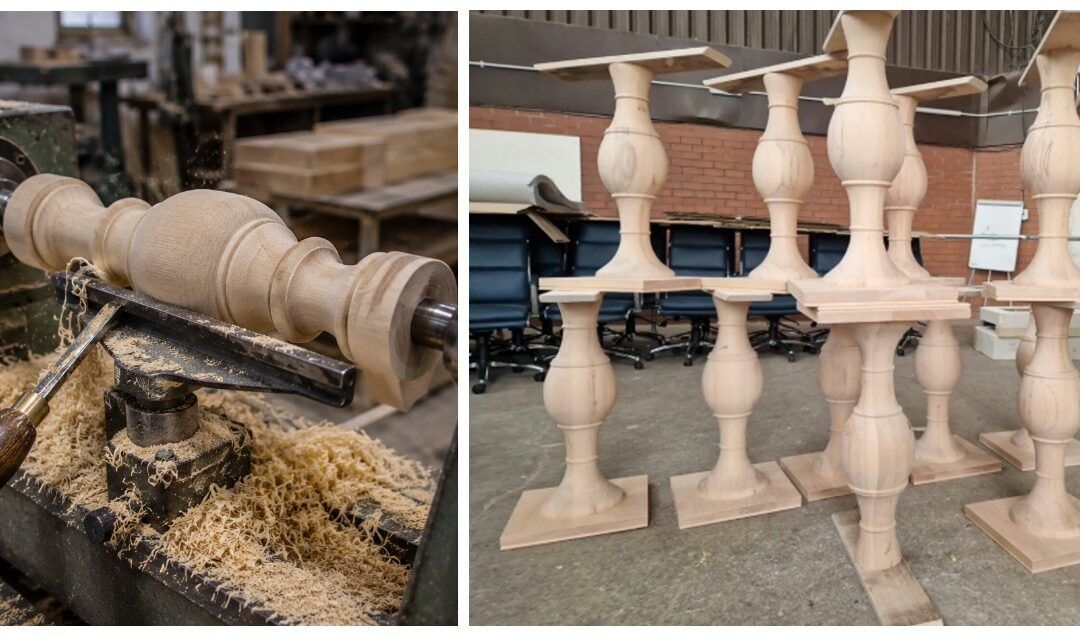
The manufacturing photographs from The Queen’s Club project show the table bases before staining and finishing.
At this stage, the turned solid timber profile is clearly visible. The decorative shape gives the base its distinctive traditional appearance.
Once manufactured, the timber can be finished to complement the wider interior.
Wood stain selection is particularly important when new furniture needs to sit alongside existing tables, chairs, flooring or architectural joinery. Small differences in tone can become noticeable when pieces are positioned next to each other.
For refurbishment projects, we can work towards a finish that complements the existing furniture as closely as possible.
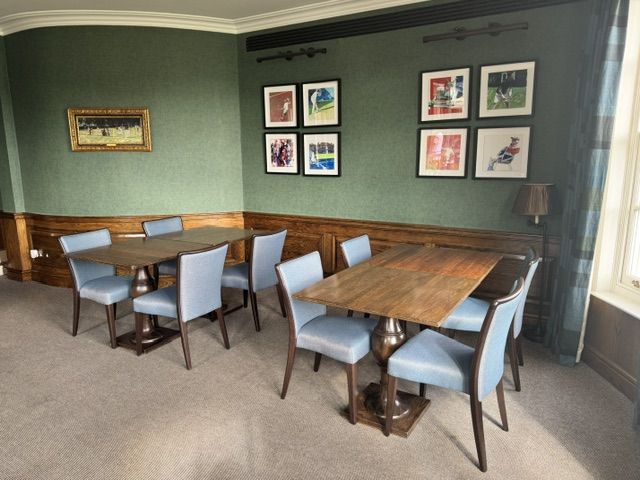
The completed Queen’s Club restaurant demonstrates the result. The new tables blend naturally into an established interior filled with traditional furniture and rich timber finishes.
Matching Existing Restaurant Furniture
One of the most useful applications for bespoke wooden table bases is matching existing furniture.
Restaurants and hotels often refurbish their interiors in stages. Furniture may have been installed many years earlier, and the original product may no longer be available.
However, replacing an entire furniture collection is not always necessary.
If the existing design remains suitable, bespoke manufacturing can allow additional tables to be created in a similar style.
Several elements can be considered when recreating or complementing an existing table:
- Overall height
- Base width
- Pedestal profile
- Turned timber detailing
- Floor plate dimensions
- Table top size
- Timber species
- Edge profile
- Wood stain
- Surface finish
Attention to these details helps new furniture sit comfortably alongside the original pieces.
Bespoke Solid Ash Table Tops for The Queen’s Club
The Queen’s Club project involved more than the table bases.
We also supplied 25mm solid ash wooden table tops for the restaurant. These were manufactured in the required sizes and finished to complement the existing furniture.
A sample of the original table top was used to recreate its distinctive edge detail.
This was important because simply matching the dimensions would not have produced the same appearance. The edge profile formed part of the character of the original table.
Combining the reproduced wooden bases with bespoke solid ash tops allowed the complete tables to integrate into the existing restaurant.
Why Solid Timber Works So Well
Solid timber brings warmth, texture and natural character to hospitality interiors.
Unlike many mass-produced materials, each piece of timber has subtle variations in grain and tone. This gives wooden furniture a natural quality that works particularly well in restaurants, hotels and traditional interiors.
Timber is also extremely versatile.
It can be turned, shaped, machined, stained and finished in many different ways. This gives designers much greater freedom when creating bespoke furniture.
Depending on the project, the timber can be finished in a natural tone or stained to create a darker, richer appearance.
The final specification should consider both aesthetics and commercial use.
Bespoke Wood Stains and Finishes
The colour of a wooden table base can dramatically affect the finished furniture.
Natural and lighter stains can highlight the timber grain and create a contemporary appearance. Medium and darker finishes can produce a more traditional character.
For refurbishment projects, the objective may be different. Instead of selecting a new colour, the priority may be to complement existing furniture.
Our range of wood stains and finishes provides designers with options for coordinating tables with chairs, fixed seating and other timber furniture.
We always recommend reviewing physical wood samples before confirming a finish. Timber is a natural material, so grain and colour can vary.
Traditional Design with Commercial Performance
Bespoke does not mean that practical considerations should be forgotten.
A restaurant table may be used by hundreds of customers throughout its working life. The base therefore needs to provide reliable support while remaining suitable for a busy commercial environment.
Proportion is particularly important.
A base that is too small may affect stability. In contrast, an oversized base can restrict legroom or make chairs difficult to position.
The relationship between the table base and table top must therefore be considered as one complete piece of furniture.
Our team can help assess suitable base dimensions and configurations for the intended table top and commercial environment.
Restaurant and Hospitality Applications
Bespoke turned wooden table bases can work across many types of commercial interior.
They are particularly suitable for:
- Restaurants
- Hotels
- Private members’ clubs
- Bars and pubs
- Cafés
- Hotel dining rooms
- Private dining spaces
- Golf and country clubs
- Heritage properties
- Boutique hospitality interiors
- Premium leisure environments
The style can be adapted to suit the venue.
A traditional club may require a substantial turned pedestal with a dark timber finish. A boutique restaurant could choose a lighter timber with a more decorative profile.
This flexibility is one of the main advantages of specifying bespoke hospitality furniture.
Bespoke Table Bases for Interior Designers and Specifiers
Interior designers often need furniture that cannot be found in a standard catalogue.
The proportions may need changing. A particular timber finish may be required. Alternatively, the design concept may call for a completely unique table base.
Bespoke manufacturing provides the flexibility to respond to these requirements.
Depending on the project, we can work from:
- Existing furniture samples
- Technical drawings
- Designer sketches
- Reference photographs
- Dimensions and specifications
- Material and finish samples
This allows the table to be developed around the interior rather than forcing the interior designer to compromise around an existing product.
New Designs or Reproducing Existing Styles
There are two main reasons clients approach us for bespoke wooden table bases.
The first is to create something new.
An interior designer may have a specific idea for a restaurant, hotel or hospitality project. We can work with the design team to develop a bespoke or made-to-measure wooden table base, with the proportions, timber, profile and finish tailored to the individual scheme.
The second is to reproduce or complement an existing style.
The Queen’s Club project is a good example. The objective was not to redesign the restaurant tables. Instead, the new furniture needed to sit naturally alongside the established pieces.
Both approaches require flexibility and careful attention to detail.
Complete Bespoke Restaurant Tables
Although this guide focuses on solid wood table bases, we can also supply complete commercial tables.
This means the base and top can be considered together from the beginning of the project.
Table tops can be produced in different shapes, sizes, materials and finishes depending on the specification. Solid timber options can also incorporate bespoke edge details.
Considering the complete table helps ensure the proportions work correctly.
It also makes it easier to coordinate the table with surrounding restaurant chairs, bar stools, banquette seating and other contract furniture.
Why Choose Bespoke Rather Than Standard?
Standard table bases are ideal for many commercial projects. They are readily available and suit a wide range of interiors.
However, some spaces require something different.
Bespoke wooden table bases become particularly valuable when:
- Existing furniture needs to be matched
- A specific design cannot be sourced
- Non-standard dimensions are required
- A traditional interior requires an authentic furniture style
- A designer wants a unique table
- Timber finishes need to coordinate across a scheme
- Standard commercial bases do not suit the design concept
In these situations, bespoke manufacturing allows the furniture to respond directly to the project.
Creating Tables That Belong in the Interior
The best bespoke furniture does not necessarily look new.
In an established restaurant, hotel or private members’ club, the goal may be for new furniture to appear as though it has always belonged there.
That was particularly important at The Queen’s Club.
By working from samples of the existing tables, we were able to recreate important details across both the bases and solid ash table tops. The finished tables could then become part of the established restaurant interior rather than competing with it.
This approach can be invaluable for refurbishment projects where the character of the venue needs to be protected.
Explore Bespoke Contract Furniture
Bespoke wooden table bases form part of our wider approach to contract furniture manufacturing.
Dynamic Contract Furniture supplies furniture for restaurants, hotels, workplaces, healthcare environments and other commercial interiors across the UK.
Alongside bespoke tables, our ranges include restaurant chairs, lounge seating, sofas, bar stools, fixed seating, table tops and a wide selection of commercial table bases.
You can also explore our Contract Furniture Guides & Resources, latest blogs and completed projects for further specification advice and interior inspiration.
Frequently Asked Questions
Can you manufacture bespoke wooden table bases?
Yes. We can manufacture bespoke wooden table bases in a wide range of styles, including traditional turned profiles, decorative pedestals and more complex timber structures.
Can you copy an existing wooden table base?
An existing base can be used as a reference when developing new furniture. For The Queen’s Club project, our team worked from a sample of the existing base to reproduce the required design for additional restaurant tables.
What styles of turned table base can you produce?
Designs can include traditional turned columns, spiral and barley-twist details, pedestal bases, twin-column bases and shaped timber feet. The final design will depend on the table size, intended use and project requirements.
Can the table base be stained to match existing furniture?
We offer a wide choice of wood stains and finishes. Where a project involves existing furniture, samples can help us work towards a complementary finish.
Do you also manufacture wooden table tops?
We can supply bespoke wooden table tops alongside the bases. For The Queen’s Club, we supplied 25mm solid ash tops and recreated a special edge detail from an existing sample.
Are bespoke wooden table bases suitable for restaurants?
Yes. The design must take account of commercial requirements such as stability, table top dimensions, legroom and regular use. Our team can advise on suitable configurations for hospitality environments.
Can you work from an interior designer’s drawing?
Yes. Depending on the project, bespoke furniture can be developed from drawings, sketches, specifications, dimensions, photographs or existing samples.
Discuss Your Bespoke Table Project
A table base can be much more than a functional support. With the right timber, proportions and craftsmanship, it can become an important feature within the interior.
From traditional turned pedestals to decorative barley-twist designs and bespoke bases created to complement existing furniture, our team can help develop a solution around your project.
The work completed for The Queen’s Club in London demonstrates what can be achieved when bespoke manufacturing and careful attention to detail come together.
If you are planning a restaurant, hotel, bar or hospitality refurbishment, explore our bespoke furniture, commercial tables, table bases, table tops and wood stains. You can also visit our Contract Furniture Guides & Resources and latest blogs for further specification advice.
Contact Dynamic Contract Furniture to discuss bespoke wooden table bases, solid timber table tops or a complete commercial furniture package for your next project.
If you are researching your next hospitality project, explore our growing collection of Contract Furniture Guides & Resources. From banquette seating and hotel furniture to workplace furniture, restaurant furniture and commercial interior design advice, our expert guides are designed to help architects, interior designers, hotel operators and specifiers make informed furniture decisions. You can also browse our latest blog articles for industry insights, project inspiration and practical specification advice.
Whether you are planning a boutique hotel refurbishment, a new hospitality development or a multi-room bedroom upgrade, our experienced team is here to help.
Contact Dynamic Contract Furniture today to discuss your project and discover how our contract table bases, bespoke contract furniture and hotel furniture solutions can help create comfortable, durable hospitality spaces.