
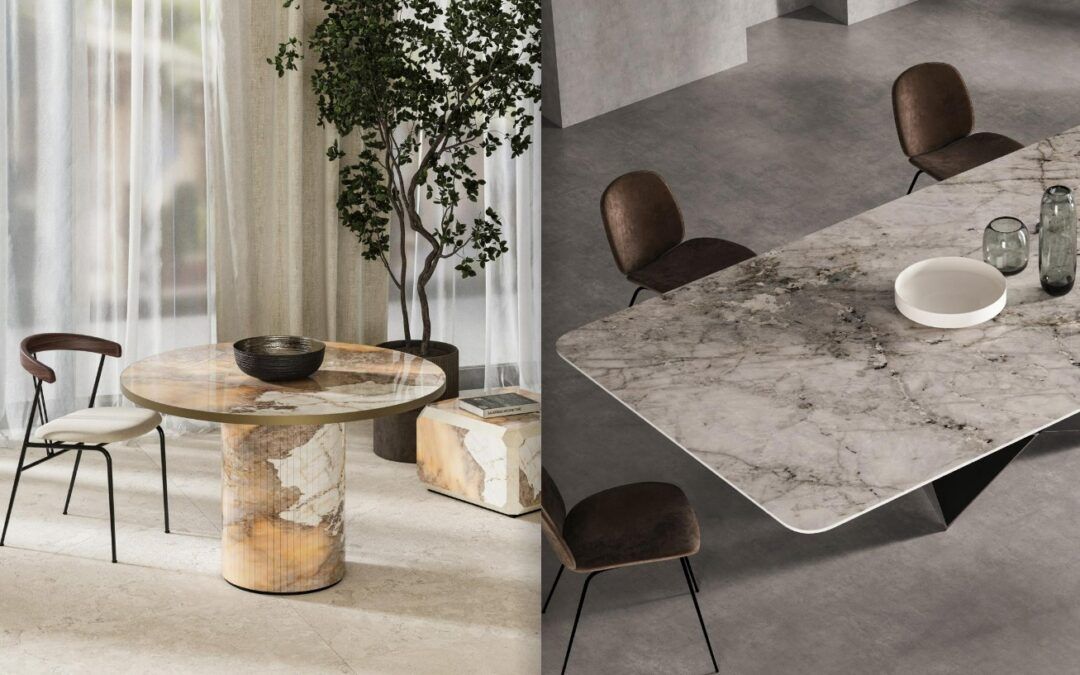
Discover why porcelain table tops are a practical alternative to marble, with resistance to acidic spills, straightforward maintenance and versatile finishes for commercial interiors.
Porcelain Table Tops: A Practical Alternative to Marble for Contract Furniture
Choosing the right table tops means balancing appearance, durability and everyday maintenance. A table might look impressive when first installed, but it also needs to perform through busy breakfast services, working lunches, evening drinks and regular cleaning.
Whether you are selecting restaurant furniture, hotel furniture, workplace furniture or healthcare furniture, the surface should suit both the design of the space and the way people use it.
Porcelain table tops offer an attractive option for contract furniture projects. They combine a wide choice of colours, shapes and finishes with straightforward care. One of their most useful advantages over natural marble is their resistance to the acidic spills commonly found wherever food and drinks are served.
Why acidic drinks can damage marble table tops
Natural marble has long been valued for its distinctive veining and elegant appearance. However, it contains calcium carbonate, which reacts with acids.
When wine, fruit juice or a cocktail containing lemon or lime spills onto a marble table top, that reaction can leave a dull patch, cloudy ring or mark. Acidic foods and dressings can cause similar problems. This surface damage is known as acid etching.
An etched mark is different from an ordinary stain. A stain changes the colour of the material, while etching changes the surface finish itself. This means an etched area cannot simply be wiped clean, and professional refinishing or repolishing may be needed to restore its appearance.
In restaurants, bars and hotel dining areas, contact with acidic drinks is part of everyday service. Understanding how the chosen surface responds to those spills is therefore an important part of specifying tables.
How porcelain handles everyday acidic spills
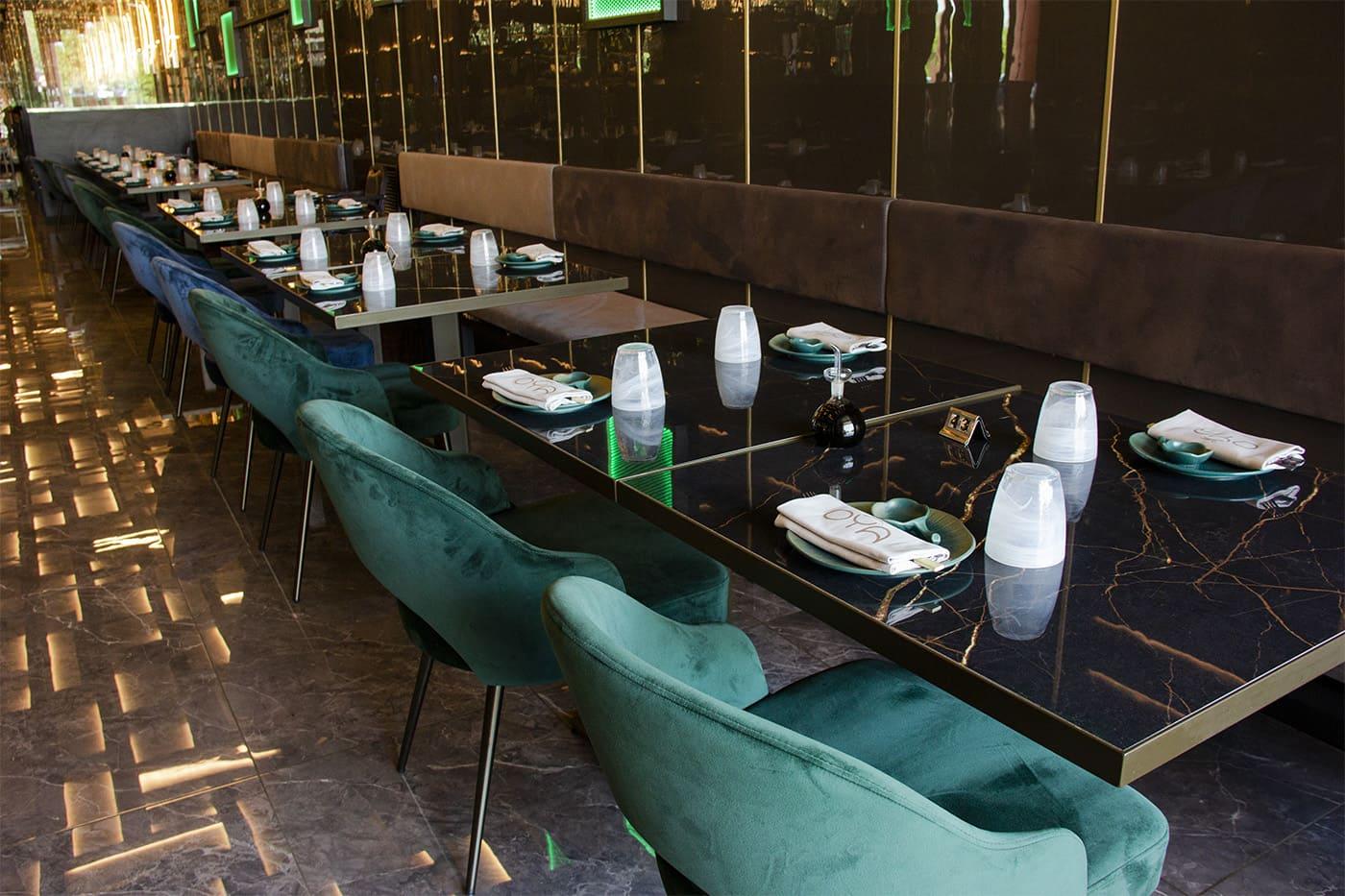
Porcelain does not have the same acid-sensitive calcium carbonate structure as marble. Its fired ceramic surface is highly resistant to the everyday acids found in food and drinks, helping protect against the etching associated with natural marble.
For hospitality operators, this makes porcelain a practical choice for tables used throughout the day, from breakfast juices to evening cocktails.
Spills should still be removed promptly, especially on polished finishes, and cleaning should follow the guidance for the selected surface. Resistance to food and drink acids does not mean that every strong chemical cleaner is suitable.
The benefit is a surface that is more forgiving during normal service, while still offering the appearance needed for an attractive interior.
The look of marble with straightforward care
Marble-effect porcelain offers veining, colour variation and visual depth that can complement a wide range of interiors. Pale finishes can create a light, understated setting, while darker designs provide contrast and a more dramatic focal point.
This flexibility makes porcelain useful for projects where the appearance of stone is desirable but easy maintenance is also a priority.
Natural marble remains an appealing choice for clients who value its individual character. Porcelain provides an alternative for spaces where resistance to everyday spills and a simpler care routine carry greater weight in the decision.
Porcelain table tops for restaurant furniture
Restaurant furniture needs to cope with repeated use, frequent cleaning and constant contact with food and drinks. Tables also play a major role in how the dining space looks and feels.
Porcelain table tops bring together these practical and visual requirements. Their resistance to everyday acidic spills is particularly useful in restaurants and bars serving wine, fruit juices and citrus cocktails.
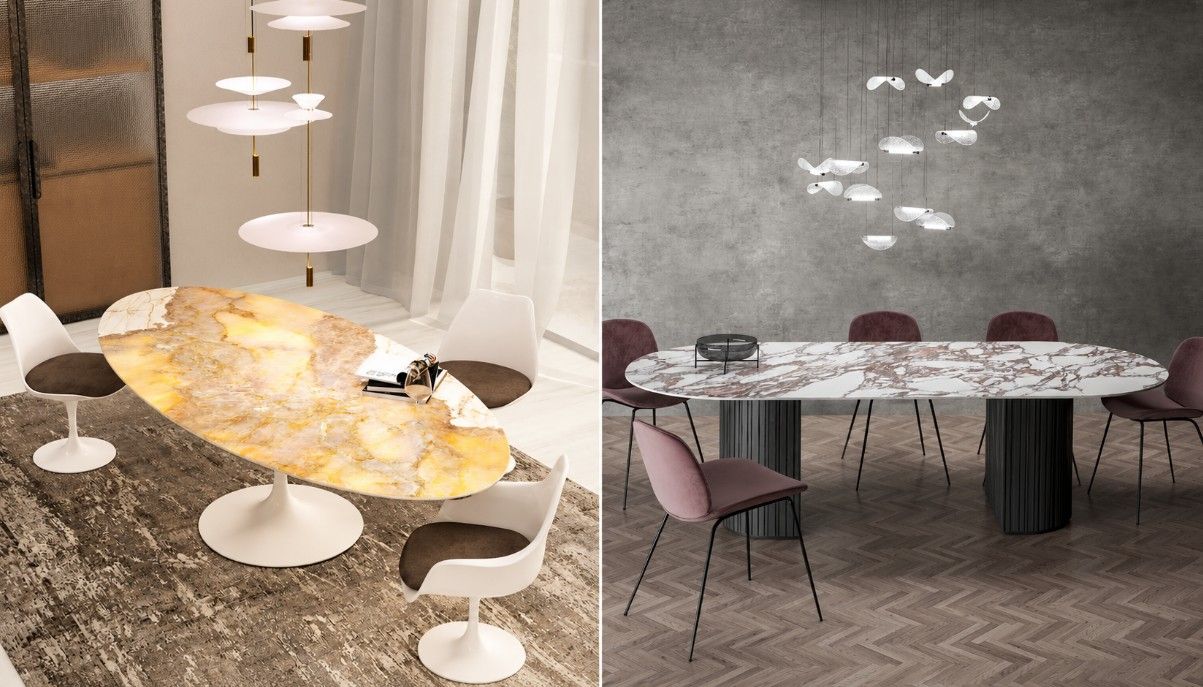
Different shapes and sizes allow a scheme to include compact tables for two, larger dining tables and communal seating arrangements. A coordinated finish can tie these configurations together while allowing the layout to accommodate different group sizes.
When specifying restaurant tables, it is also important to consider the base footprint, legroom and overall stability. The top and base should work together as a complete piece of furniture.
An elegant choice for hotel furniture
Hotel furniture needs to create a welcoming impression across spaces that often serve different purposes throughout the day.
Porcelain table tops can be used within breakfast rooms, restaurants, lounges and reception seating areas, helping create a consistent design across the property. A finish used on dining tables can also inspire complementary choices elsewhere in the scheme.
Decorative metal edging provides another way to connect the tables with lighting, handles and other interior details. Warm metallic finishes can introduce richness, while darker edging can complement contemporary table bases and seating.
For hotel operators, straightforward daily maintenance is also valuable in spaces that need to remain presentable between guest arrivals and busy service periods.
Practical options for workplace furniture
Workplace furniture extends beyond desks and meeting rooms. Staff cafés, breakout areas and communal dining spaces need tables that support everyday use while contributing to a comfortable working environment.
Porcelain table tops offer a choice for these shared spaces, with finishes that can complement an office interior.
Smaller tables can support lunch breaks and informal conversations, while larger configurations can provide space for shared dining or collaborative discussions. Choosing a suitable shape and base helps make the available floor area practical and comfortable.
A surface that is easy to clean is particularly useful where the same table serves several purposes throughout the working day.
Considering porcelain for healthcare furniture
When selecting healthcare furniture, ease of cleaning should be considered alongside accessibility, stability and user comfort.
Porcelain’s low-porosity surface can make it a useful option for dining rooms, visitor cafés and communal spaces, provided the complete table meets the requirements of its setting.
The specification should consider the edge profile, table height, wheelchair clearance and base design. Compatibility with the facility’s cleaning products and procedures should also be confirmed.
Rounded profiles may be preferable in some environments. The final choice should reflect the needs of the people using the furniture and the practical requirements of the care setting.
Edge profiles and decorative finishes
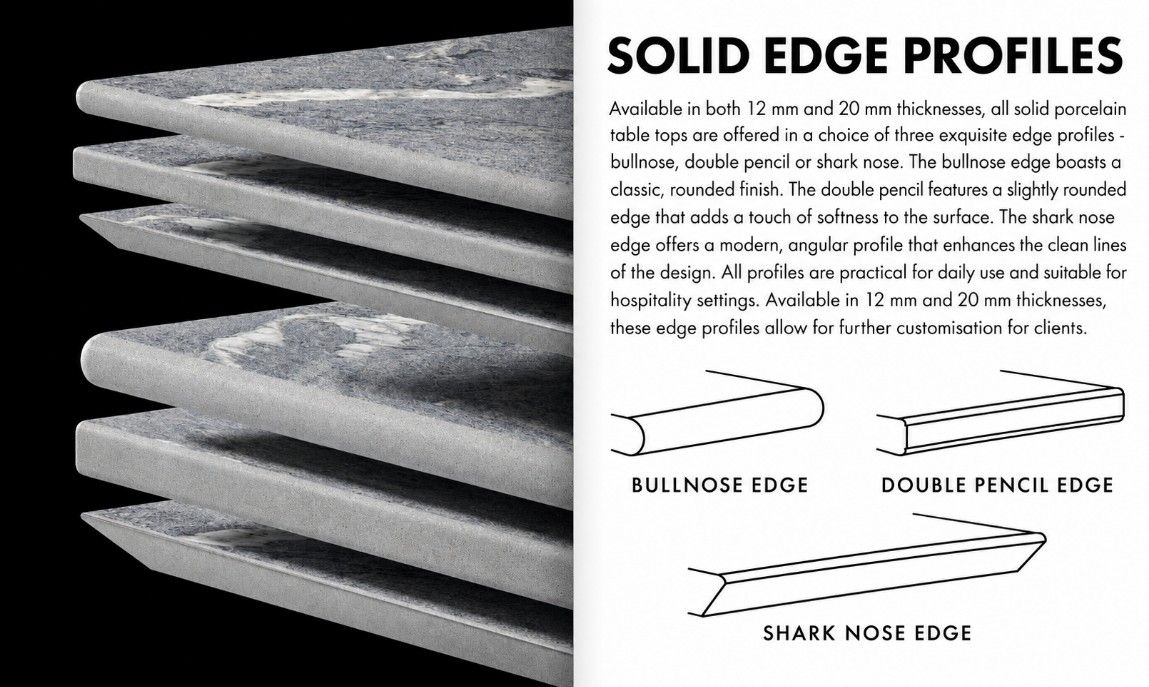
The edge of a table top can make a noticeable difference to its overall appearance. Solid porcelain options include 12 mm and 20 mm thicknesses, with several profiles available.
- Bullnose: a rounded edge that creates a softer, classic appearance.
- Double pencil: a subtly rounded profile with a neat, understated finish.
- Shark nose: an angled profile that creates a slimmer-looking edge.
Metal banding offers a further decorative option. Finishes include brushed copper, brushed bronze, brushed gold, brushed inox, satin black and decorative bronze.
A 32 mm metal-edged option can create a more substantial appearance and help coordinate the table with other materials throughout the interior. Available details should be confirmed for the chosen finish and configuration.
Shapes and sizes to suit your layout
Porcelain table tops can be specified in round, square, rectangular, oval and other shaped designs. Custom configurations can also be considered using technical drawings.
Depending on the shape and specification, options extend up to 3,000 × 1,500 mm, with round and square designs shown up to 1,500 × 1,500 mm.
Choosing the right dimensions involves more than fitting the table into the room. Seating capacity, circulation space, accessibility and the intended use all matter.
Larger tops also require an appropriate support arrangement. Selecting the top and base together helps ensure that the finished table is stable and suitable for its setting.
Porcelain table tops for outdoor dining
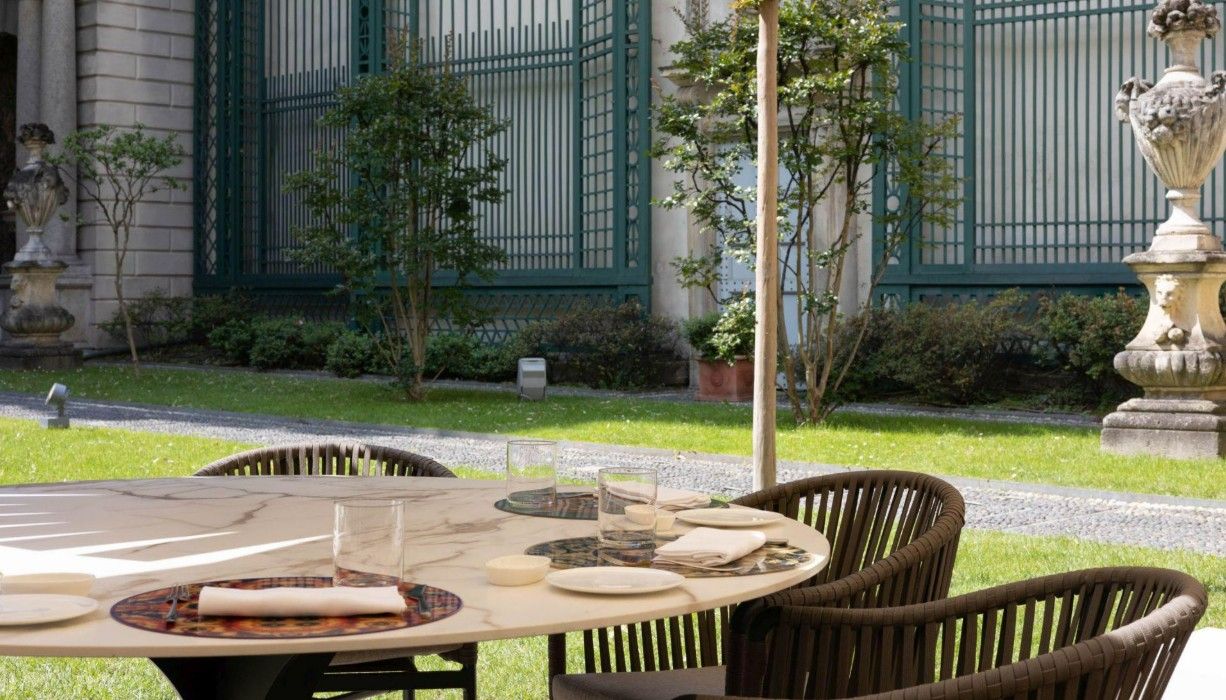
Suitable porcelain specifications can also be used for terraces, courtyards and outdoor dining areas. This provides an opportunity to coordinate the appearance of indoor and outdoor furniture.
For outdoor projects, the complete construction needs to be assessed. The backing, fixings, edge treatment and base must all be suitable for the intended conditions.
A moisture-resistant component should not automatically be treated as waterproof. Confirming the outdoor suitability of the complete table helps ensure the specification matches the location and expected exposure.
Cleaning and maintaining porcelain table tops
Porcelain table tops do not require routine sealing or resealing, making their care straightforward.
For everyday cleaning, warm water and a soft microfibre cloth are generally sufficient. Drying with a second clean cloth helps remove water marks and leaves a tidy finish, particularly on polished surfaces.
Food and drink spills should be removed promptly. For more stubborn marks, use a suitable non-abrasive cleaner in accordance with the surface manufacturer’s instructions.
Avoid abrasive pads and unsuitable strong chemicals. Test any new cleaning product on a small, inconspicuous area first.
Although porcelain is hard wearing, careful handling remains important. Protect edges from knocks when moving tables and avoid dragging heavy items across the surface.
Frequently Asked Questions About Porcelain Table Tops
Are porcelain table tops better than marble for restaurants?
Porcelain is often a more practical choice for busy restaurants because it resists everyday food and drink acids and does not require routine sealing. Marble offers unique natural character, but acidic spills can etch its surface. The right choice depends on the appearance and maintenance requirements of your restaurant furniture.
Can wine or lemon juice damage porcelain table tops?
Porcelain is highly resistant to the everyday acids found in wine, lemon juice and other drinks. Unlike marble, it does not have the same acid-sensitive calcium carbonate structure. However, spills should still be wiped away promptly, and the care instructions for the chosen finish should always be followed.
Do porcelain table tops need sealing?
Porcelain table tops generally do not need sealing or periodic resealing. For routine cleaning, use warm water and a soft microfibre cloth, then dry with a clean cloth. Follow the supplier’s guidance for your particular finish and avoid abrasive cleaning products.
Can porcelain table tops be used outdoors?
Yes, provided the complete table is specified for outdoor use. The porcelain top, backing, fixings, edging and base must all suit the intended conditions. Always confirm outdoor suitability before choosing tables for a terrace, courtyard or garden dining area.
Are porcelain table tops suitable for commercial settings beyond restaurants?
Porcelain table tops can be considered for hotel furniture, workplace furniture and healthcare furniture, particularly in dining rooms, cafés and communal areas. Each contract furniture project should also account for stability, accessibility, edge profiles and compatibility with the cleaning procedures used in that setting.
Contract furniture from Dynamic Contract Furniture
Porcelain table tops combine design flexibility with practical benefits, particularly where resistance to acidic drinks and straightforward maintenance are priorities.
At Dynamic Contract Furniture, we help clients select restaurant furniture, hotel furniture, workplace furniture and healthcare furniture for projects across the UK.
From choosing a finish and edge profile to coordinating table bases and seating, we can help create a scheme that suits your space and its everyday use.
If you are researching your next hospitality project, explore our growing collection of Contract Furniture Guides & Resources. From banquette seating and hotel furniture to workplace furniture, restaurant furniture and commercial interior design advice, our expert guides are designed to help architects, interior designers, hotel operators and specifiers make informed furniture decisions. You can also browse our latest blog articles for industry insights, project inspiration and practical specification advice.
Whether you are planning a boutique hotel refurbishment, a new hospitality development or a multi-room bedroom upgrade, our experienced team is here to help.
Contact Dynamic Contract Furniture today to discuss your project and discover how our contract table bases, bespoke contract furniture and hotel furniture solutions can help create comfortable, durable hospitality spaces.